Circular Logic: What Britain's Lighthouse Keepers Knew About Perfect Small Space Living
Climb the spiral staircase of any British lighthouse and you'll discover something unexpected: interiors so precisely calibrated, so ruthlessly edited, so perfectly attuned to their purpose that they feel startlingly contemporary. These cylindrical homes, scattered along our coastline from the Hebrides to Cornwall, represent one of Britain's most overlooked design achievements — compact living spaces where every decision was driven by necessity, and every necessity became beautiful.
The Tyranny of the Circle
Lighthouse interiors begin with an architectural constraint that would terrify most designers: the circle. No right angles. No convenient corners for storage. No standard furniture dimensions that simply slot into place. Yet from this apparent limitation, lighthouse architects created spaces of remarkable efficiency and unexpected beauty.
The circular floor plan forces a different kind of spatial thinking. Furniture must earn its place through pure functionality. Storage becomes sculptural, following the curve of the walls. Movement through the space becomes a gentle spiral rather than the angular navigation of conventional rooms.
Modern open-plan living could learn from this circular logic. Instead of fighting curved walls or bay windows, embrace them. Let furniture follow natural curves rather than imposing rigid geometry. Create storage that flows with architectural lines rather than against them.
The Democracy of Minimalism
Lighthouse minimalism wasn't a lifestyle choice — it was survival strategy. Every object had to justify its presence through utility. Decoration was borrowed from the surrounding seascape rather than accumulated through shopping. The result was interiors of monastic purity that felt abundant rather than austere.
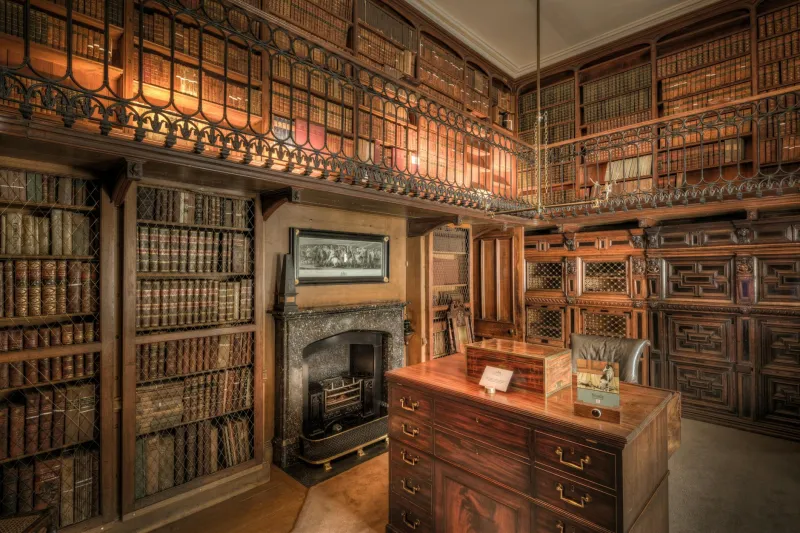
Visit the restored keeper's quarters at Beachy Head or the Needles lighthouse museum and you'll see this principle in action. A single wooden table serves multiple functions. Hooks on walls replace wardrobes. Books are stored in purpose-built alcoves that follow the tower's curve. Nothing is superfluous, yet nothing feels missing.
 Photo: Needles lighthouse, via c8.alamy.com
 Photo: Beachy Head, via www.shutterstock.com
This enforced editing offers a powerful antidote to contemporary clutter anxiety. The lighthouse approach suggests starting with essential functions rather than desired aesthetics. What do you actually need this room to do? What objects genuinely serve those purposes? Everything else becomes negotiable.
Curved Storage Solutions
The genius of lighthouse storage lies in its integration with architecture. Unable to rely on standard rectangular furniture, lighthouse designers created bespoke solutions that turned structural challenges into spatial opportunities.
Built-in seating follows the wall's curve while hiding storage beneath. Narrow shelves spiral up the walls, maximising vertical space without blocking precious natural light. Hanging storage suspended from the ceiling keeps floor space clear while providing essential storage.
Contemporary homes can borrow this integrated thinking. Instead of buying furniture to fill spaces, consider what storage solutions your architecture suggests. Bay windows become reading nooks with hidden storage. Alcoves beside fireplaces house books and objects. Under-stair space becomes purposeful rather than merely functional.
Light as Luxury
Lighthouse interiors treat natural light as the ultimate luxury. Windows are kept unobstructed. Mirrors multiply available illumination. White-painted walls bounce light around the circular space, creating brightness that feels almost supernatural in such compact quarters.
This light-maximising approach feels particularly relevant for modern urban living, where natural illumination is often compromised. The lighthouse strategy of painting everything white isn't about minimalist aesthetics — it's about making the most of available light.
Consider painting not just walls but ceilings, window frames, even floorboards in shades of white. Use mirrors strategically to bounce light into darker corners. Keep window treatments minimal, letting architecture frame views rather than fabric.
The Borrowed Landscape
Perhaps the most sophisticated aspect of lighthouse interior design is how it treats the surrounding landscape as part of the decorative scheme. The drama happening outside the windows — crashing waves, wheeling seabirds, changing weather — provides all the visual interest the interior needs.
This principle of 'borrowed scenery' originated in Japanese garden design but found perfect expression in British lighthouse living. Why compete with the North Sea when you can simply frame it? Why accumulate artwork when you have a constantly changing exhibition of sky and water?
Urban homes can employ similar logic. A single well-framed view of trees, sky, or even interesting architecture can provide more visual richness than multiple artworks. Large, unadorned windows become picture frames for the world outside. The key lies in editing interior elements that compete with natural views.
Vertical Living Logic
Lighthouses are essentially vertical homes, with different functions stacked rather than spread horizontally. This creates a unique domestic rhythm: sleeping at the bottom, living in the middle, working at the top. Each level has its own character while contributing to the whole.
Modern multi-storey homes can learn from this vertical zoning. Instead of repeating similar functions on each floor, consider how different levels might serve distinct purposes. Ground floors for public functions, middle floors for private living, top floors for work or retreat.
Even single-storey spaces can employ vertical thinking. High shelving for rarely used items. Mid-level storage for daily necessities. Low surfaces for frequently accessed objects. This creates visual hierarchy while maximising storage efficiency.
The Rhythm of Routine
Lighthouse living imposed a particular rhythm on daily life. The compact space meant that activities had to be carefully sequenced rather than simultaneous. Meals happened at the table, which was then cleared for other uses. Work spaces transformed into relaxation areas. Bedrooms served multiple daytime functions.
This sequential approach to space use offers valuable lessons for contemporary small-space living. Instead of trying to accommodate all functions simultaneously, consider how spaces might transform throughout the day. A dining table that becomes a desk. A living room that converts to a guest bedroom. Flexible thinking rather than fixed functions.
Weather as Interior Design
Lighthouse keepers lived intimately with weather, and their interiors reflected this relationship. Storm shutters weren't just protective — they transformed the interior atmosphere. Oil lamps created different moods than electric light. The sound of wind and waves became part of the acoustic environment.
Modern homes can embrace similar weather sensitivity. Curtains that respond to light levels throughout the day. Lighting schemes that adapt to seasons. Interior arrangements that acknowledge the natural rhythms happening outside.
The Poetry of Purpose
What makes lighthouse interiors so compelling isn't their minimalism per se, but their purposefulness. Every design decision serves the fundamental mission: keeping ships safe. This clarity of purpose creates a coherence that purely aesthetic approaches often lack.
Contemporary interiors could benefit from similar mission clarity. What is this room fundamentally for? How do design decisions support that purpose? When every choice serves a clear function, the result feels authentic rather than arbitrary.
Lessons for Land
The lighthouse approach to interior design — circular thinking, enforced minimalism, borrowed landscape, purposeful arrangement — offers a powerful alternative to contemporary accumulation culture. These coastal towers prove that constraint breeds creativity, that limitation can liberate rather than restrict.
Their enduring appeal lies not in their maritime romanticism but in their sophisticated understanding of how to live well in small spaces. They demonstrate that luxury isn't about size or stuff, but about thoughtful editing, purposeful arrangement, and deep connection to place.
In an era of housing pressure and environmental consciousness, the lighthouse keeper's approach to domestic space feels both practical and profound. Sometimes the most radical interior design move is simply knowing what to leave out.