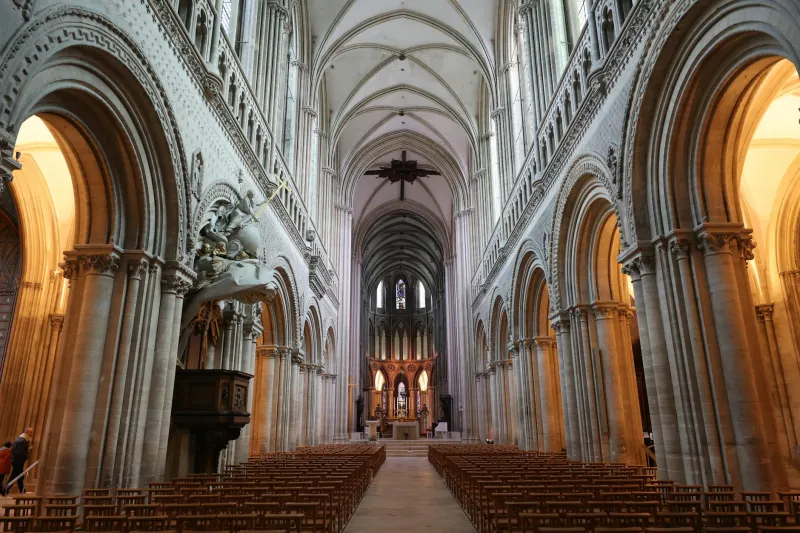
Step inside Canterbury Cathedral or York Minster and something extraordinary happens. Your breathing changes. Your voice drops to a whisper. Your perspective shifts, quite literally, as your gaze is drawn inexorably upward. These aren't accidental responses — they're the intended result of the most sophisticated spatial psychology ever deployed in stone.
 Photo: Canterbury Cathedral, via www.canterbury-cathedral.org
Britain's medieval cathedral builders were the ultimate experience designers, creating environments engineered to provoke specific emotional responses. Seven centuries before modern architects discovered 'biophilic design' or 'spatial psychology', these anonymous masters had decoded the precise relationship between built environment and human emotion.
The Processional Prelude
Cathedral magic begins long before you reach the altar. The approach itself is choreographed theatre, designed to build anticipation through careful manipulation of scale and revelation. At Durham Cathedral, the climb from the river valley gradually unveils the building's mass, each turn offering a new perspective that amplifies the structure's growing presence.
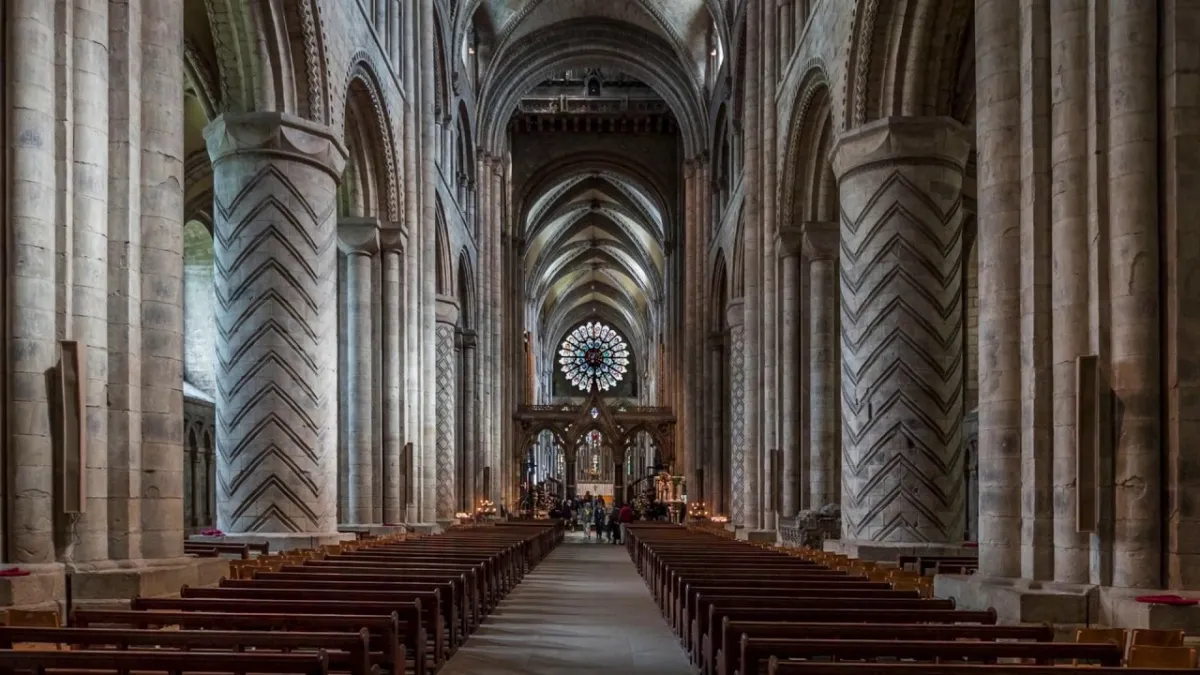 Photo: Durham Cathedral, via i.ytimg.com
This processional thinking translates beautifully to domestic spaces. Consider your home's entry sequence — not just the front door, but the entire journey from pavement to living space. The most memorable homes create anticipation through carefully orchestrated revelation: a glimpse of garden through a side gate, a hint of the main room through a partially open door, the deliberate contrast between a modest hallway and a soaring main space beyond.
The Threshold Moment
Cathedral architects understood that transition moments carry enormous psychological weight. The passage from exterior to interior isn't simply functional — it's transformational. Many British cathedrals employ a double-threshold system: first, the approach to the building proper, then the passage from narthex to nave, each transition marked by changes in light, scale and acoustics.
Modern homes can harness this threshold psychology through thoughtful entry design. A small entrance hall that opens dramatically into your main living space creates the same sense of revelation that makes cathedral interiors so powerful. The key lies in contrast — the compression followed by release, the dark followed by light, the low ceiling followed by soaring space.
Light as Architecture
Perhaps no element of cathedral design is more sophisticated than the manipulation of natural light. The clerestory windows of Gothic cathedrals aren't simply functional — they're precisely calculated to create specific atmospheric effects at different times of day and seasons.
At Salisbury Cathedral, the western rose window throws coloured light across the nave floor during evening services, transforming the space from austere to mystical. The builders understood that light doesn't just illuminate space — it defines it, shapes it, gives it emotional character.
 Photo: Salisbury Cathedral, via traveldigg.com
Contemporary homes can employ similar light choreography, though on a more intimate scale. A single well-placed skylight can transform a hallway from corridor to gallery. Clerestory windows — high horizontal windows that borrow cathedral logic — can flood a room with light while maintaining privacy. The strategic placement of a tall, narrow window can create the same sense of vertical drama that makes cathedral interiors so compelling.
The Power of Proportion
Cathedral builders were obsessed with mathematical relationships, using specific proportional systems that create unconscious harmony. The ratio between nave width and height, the relationship between column spacing and ceiling height — these weren't arbitrary decisions but calculated attempts to create spaces that feel 'right' at a fundamental level.
The golden ratio appears repeatedly in British cathedral architecture, from the proportions of individual windows to the relationship between different spatial volumes. This mathematical harmony translates into emotional resonance — spaces that feel balanced and beautiful without the viewer understanding why.
Modern room design can harness these proportional principles. A ceiling height that's roughly 1.4 times the room's width creates pleasing vertical emphasis without feeling oppressive. Window proportions based on golden ratio mathematics feel naturally elegant. Even furniture arrangement can benefit from these ancient mathematical relationships.
Acoustic Void and Emotional Space
Cathedrals are as much about sound as sight. The vast acoustic void of the nave creates a unique sonic environment where whispers carry and footsteps echo, contributing to the space's sense of otherworldly removal from everyday life.
While few homes can replicate cathedral acoustics, the principle of using sound to enhance spatial experience remains valid. Hard surfaces that allow sound to resonate can make modest spaces feel grander. Strategic use of soft furnishings can create intimate acoustic environments within larger rooms. Even the sound of your footsteps on different flooring materials contributes to how a space feels.
Strategic Shadow
Cathedral architects were masters of strategic darkness, using shadow not as something to be eliminated but as a design element in its own right. The deep recesses of side chapels, the mysterious shadows cast by flying buttresses, the pools of darkness that make illuminated areas seem more luminous — all contribute to the building's emotional impact.
Contemporary interiors often suffer from over-illumination, flooding every corner with uniform light that eliminates mystery and drama. Cathedral logic suggests a different approach: strategic pools of shadow that make illuminated areas more precious, dark corners that create intimate retreat spaces, the interplay of light and dark that adds visual texture to any room.
Borrowed Grandeur
Not every cathedral technique requires soaring ceilings or vast floor areas. The principle of 'borrowed space' — using sightlines to incorporate exterior views or adjacent rooms into your visual experience — can make modest homes feel more expansive.
A strategically placed mirror can double a room's apparent size. An interior window between kitchen and living room borrows space from both areas. Even a partially open door that reveals a glimpse of the room beyond can create the sense of spatial flow that makes cathedral interiors feel infinite.
The Vertical Imperative
Perhaps the most transferable cathedral principle is their commitment to verticality. These buildings draw the eye upward through every possible device: pointed arches, soaring columns, vertical window tracery, ribbed vaulting that emphasises the ceiling's height.
Even homes with standard ceiling heights can employ vertical emphasis to create similar effects. Floor-to-ceiling bookcases, tall narrow windows, vertical panelling, artwork hung higher than conventional wisdom suggests — all can create the upward pull that makes spaces feel more generous and inspiring.
Sacred Geometry for Secular Spaces
The enduring power of Britain's cathedrals lies in their sophisticated understanding of how built environments affect human psychology. These buildings prove that space itself can be designed to evoke specific emotions — wonder, reverence, peace, inspiration.
Modern homes may serve different purposes, but the underlying principles remain constant. Thoughtful proportion, strategic use of light and shadow, careful orchestration of spatial sequences, the power of verticality — these cathedral lessons can transform any interior from merely functional to genuinely transformational.
The medieval builders who created these spaces understood something we're only rediscovering: that architecture isn't just about shelter, but about creating environments that elevate the human spirit. Their stone sermons continue teaching, seven centuries later, for anyone willing to look up and listen.