The Original Mood Board Masters
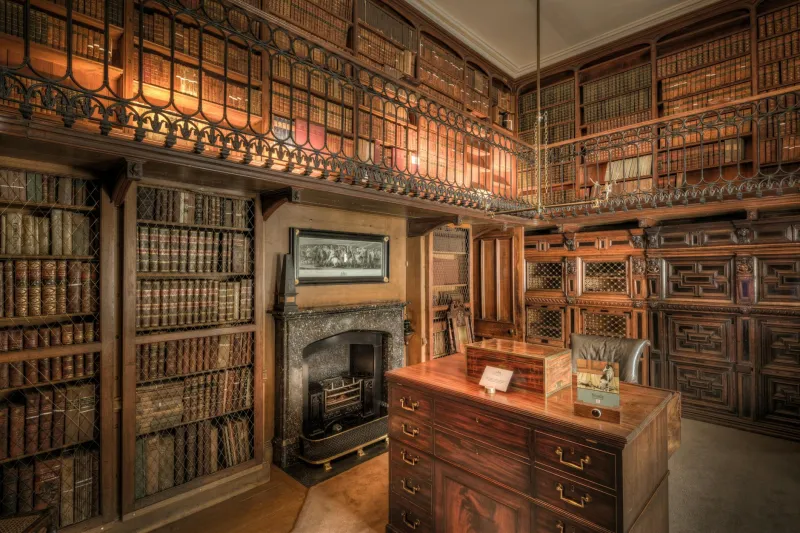
Long before Pinterest algorithms began curating our aesthetic desires, Britain's landed families were creating some of the most sophisticated interior compositions ever assembled. Their private libraries — those book-lined sanctuaries found in country houses from the Cotswolds to the Scottish Highlands — represent perhaps the highest achievement in domestic interior design.
These weren't just rooms for storing books. They were carefully orchestrated environments that balanced intellectual gravitas with intimate comfort, public grandeur with private reflection. Today, as we struggle to create homes that feel both impressive and liveable, these historic libraries offer a masterclass in getting that balance exactly right.
The Psychology of Learned Luxury
Step into the library at Chatsworth or Castle Howard, and you immediately understand something that contemporary interior design often misses: true sophistication comes not from expensive objects, but from the intelligent relationship between those objects and their setting.
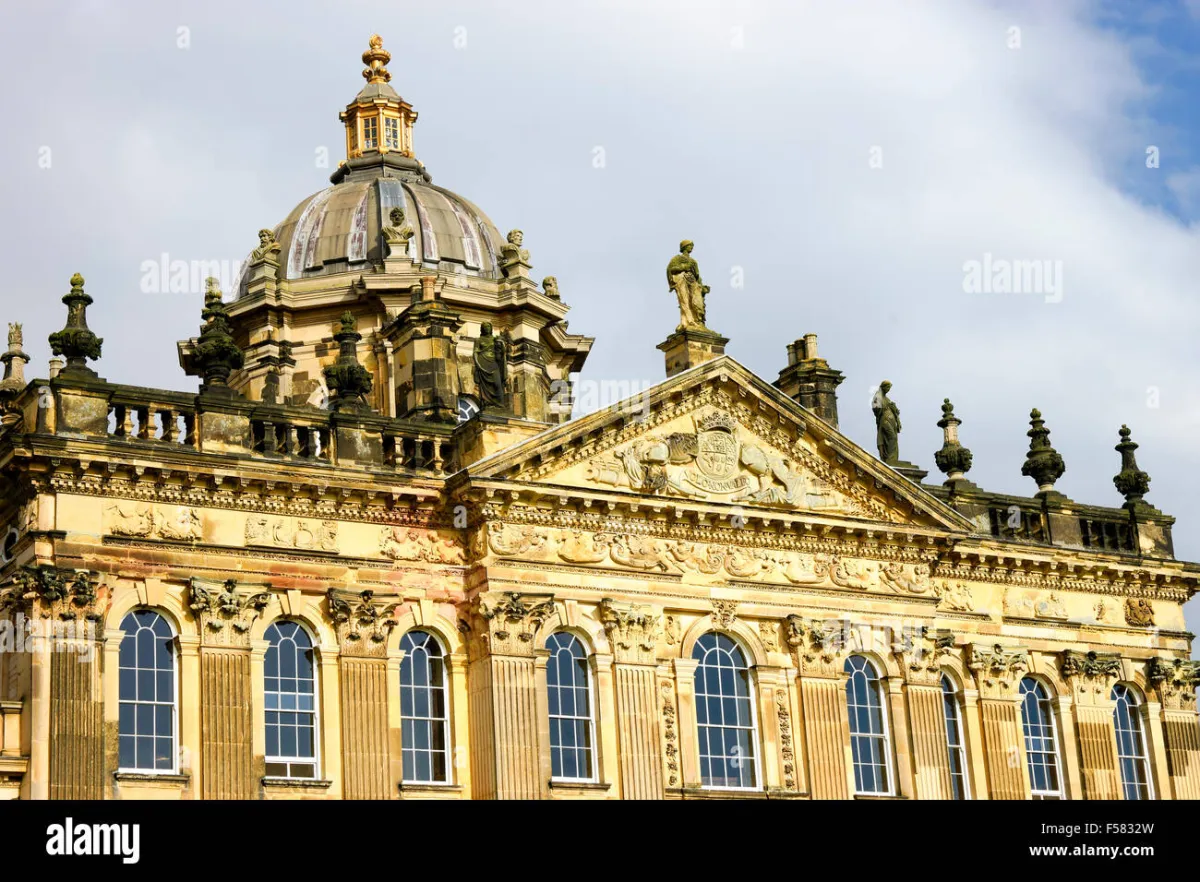 Photo: Castle Howard, via c8.alamy.com
These rooms achieved their extraordinary atmosphere through layers of accumulated intelligence — not just the books themselves, but the globes, scientific instruments, family portraits, and collected curiosities that spoke of generations of learning and travel. Each element earned its place through intellectual or emotional significance, creating interiors that felt profoundly personal despite their grand scale.
"The best country house libraries feel like someone's mind made manifest," observes interior historian Jeremy Musson, author of several books on British country house interiors. "They're not just decorated rooms — they're portraits of how cultivated people actually lived and thought."
 Photo: Jeremy Musson, via viking.tv
This principle of earned elegance offers a powerful alternative to the instant gratification of contemporary interior design. Instead of buying a 'look', these rooms suggest building character through genuine engagement with ideas, objects, and experiences.
The Architecture of Contemplation
The physical structure of these library interiors was carefully calibrated to support both solitary study and social gathering. The proportions were generous enough to feel grand, but intimate enough to encourage concentration. Ceiling heights allowed for impressive book storage without creating acoustic problems. Window placement provided excellent natural light for reading while avoiding direct glare on book spines.
Most importantly, these rooms understood the importance of multiple seating scenarios. A large central table for spreading out documents and maps. Deep armchairs positioned to catch the best light. Window seats for casual browsing. Each arrangement supported different types of intellectual activity.
Contemporary homes can learn enormously from this thoughtful approach to room planning. Instead of defaulting to standard three-piece suites, consider how your living spaces might support different activities — reading, conversation, work, relaxation — through varied seating arrangements and lighting scenarios.
The Alchemy of Colour and Texture
The colour palettes of great British libraries weren't arbitrary aesthetic choices — they were carefully considered responses to the room's function and contents. Deep greens and rich burgundies provided sophisticated backdrops that made leather book bindings glow. Warm browns and golds created cosy atmospheres that encouraged long hours of reading.
But perhaps most importantly, these rooms understood the power of textural layering. The smooth leather of book bindings played against the rough texture of stone fireplaces. Polished wood floors were softened with Persian rugs. Gilt picture frames caught and reflected the warm light from table lamps and firelight.
This sophisticated approach to material mixing offers valuable lessons for contemporary interiors. Instead of matching everything to a predetermined scheme, consider how different textures and finishes might create visual interest and tactile pleasure throughout your home.
The Art of Display Without Ostentation
One of the most remarkable aspects of these historic libraries is how they managed to display impressive collections without feeling showy or museum-like. Books, artworks, and objects were arranged to feel natural and accessible, as if they were genuinely used and enjoyed rather than merely displayed.
The secret lay in mixing scales and types of objects, creating visual rhythms that felt organic rather than forced. A row of matching leather volumes might be broken by a small bronze sculpture or an interesting geological specimen. Formal portraits were balanced with more intimate family photographs or sketches.
This principle of 'curated casualness' could transform how we approach display in contemporary homes. Instead of creating formal vignettes, consider how your favourite objects might be integrated into daily life, creating interiors that feel collected rather than purchased.
Lighting as Intellectual Infrastructure
The lighting in great country house libraries was never just about visibility — it was about creating atmosphere and supporting different types of activity. Multiple light sources at different heights created pools of illumination that could be adjusted throughout the day and evening.
Table lamps with green glass shades became almost synonymous with serious study. Firelight provided warmth and atmosphere for evening reading. Carefully positioned mirrors amplified natural light during the day. Each light source served a specific purpose while contributing to the room's overall ambience.
Contemporary homes often rely too heavily on overhead lighting, missing the opportunity to create the kind of layered, atmospheric illumination that makes rooms feel truly sophisticated. Consider how multiple, varied light sources might transform your living spaces.
The Democratisation of Grandeur
While few of us live in country houses, the principles behind these extraordinary libraries can be adapted for homes of any scale. A small study can achieve similar sophistication through careful attention to colour, texture, and the thoughtful display of books and objects. A living room can borrow the library's approach to multiple seating arrangements and atmospheric lighting.
The key is understanding that true sophistication comes not from scale or expense, but from intelligence, authenticity, and attention to how spaces actually function in daily life. These historic libraries succeeded because they were designed by and for people who genuinely understood the relationship between environment and intellectual life.
Lessons in Lasting Style
Perhaps the most important lesson from Britain's great library interiors is their demonstration that the most successful rooms are those that support and enhance their occupants' lives rather than simply impressing visitors. These spaces were beautiful, certainly, but they were beautiful in service of something larger — the life of the mind, the pleasure of learning, the importance of contemplation.
In our age of rapid stylistic change and social media pressure, these rooms offer a different model: interiors that improve with age, that become more beautiful as they accumulate the patina of genuine use, that support not just how we want to appear but how we actually want to live.
The next time you visit a National Trust property or historic house, spend time really examining the library. Look beyond the obvious grandeur to understand the subtle intelligence that makes these rooms work so well. The lessons you discover could transform not just how your home looks, but how it feels to live in it.