The Original Experience Designers
Lancelot 'Capability' Brown never designed a living room, yet his influence permeates the most sophisticated British interiors today. The landscape architects who transformed England's countryside between 1700 and 1850 were solving the same fundamental challenge that faces every interior designer: how to create spaces that feel larger, more dramatic, and more emotionally resonant than their physical boundaries suggest.
These Georgian masters invented techniques for manipulating perception, controlling revelation, and creating narrative through space—principles that translate remarkably directly into contemporary interior design.
The Art of the Stolen View
At Rousham in Oxfordshire, William Kent perfected the concept of 'borrowed landscape'—designing gardens that appeared to extend infinitely by incorporating distant church spires, rolling hills, and neighbouring estates into carefully framed compositions. Visitors believed they were seeing Kent's creation, when much of what they admired lay miles beyond his actual boundaries.
This same principle transforms modern interiors through strategic window dressing and sightline management. Rather than blocking views with heavy curtains or furniture, the smartest designers frame external landscapes as living artwork.
Consider how you currently dress your windows. Are you inadvertently cropping out the best elements of your borrowed landscape? That neighbour's mature oak tree could become your garden's focal point when framed correctly. The church tower three streets away might provide vertical punctuation to your sitting room's horizontal lines.
The Psychology of the Serpentine Path
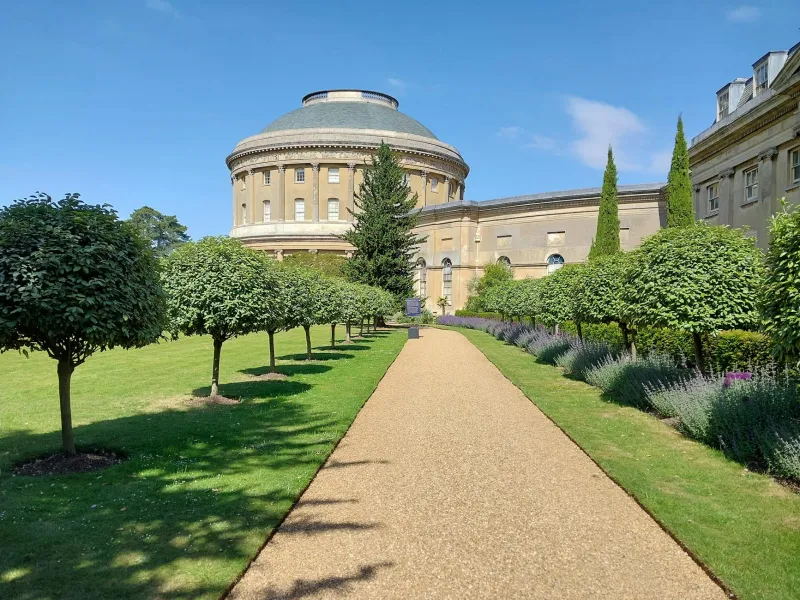
Georgian landscape designers rejected straight paths in favour of serpentine routes that revealed gardens gradually. This wasn't mere aesthetic preference—it was sophisticated psychological manipulation. Curved paths create anticipation, encourage exploration, and make spaces feel larger by preventing visitors from grasping the full layout immediately.
Modern interior designers employ identical principles through furniture arrangement and room flow. Instead of positioning sofas to face directly toward focal points, angle them slightly to create gentle curves that draw people through spaces naturally.
Consider your hallway: does it reveal your entire ground floor immediately, or does it unfold gradually? A strategically placed console table or tall plant can create gentle curves that transform a corridor into a journey of discovery.
Strategic Concealment and Reveal
The designers of Stourhead understood that what you don't see immediately becomes more valuable than what you do. Their garden unfolds through a series of carefully orchestrated reveals—the temple glimpsed through trees, the grotto discovered around a bend, the lake that appears suddenly after a woodland walk.
This principle revolutionises domestic space planning. Open-plan living works best when it incorporates moments of concealment and surprise. A kitchen island positioned to hide preparation areas from the main seating zone maintains mystery while preserving function.
Partial room dividers—perhaps a bookshelf that doesn't reach the ceiling, or a console table with an oversized lamp—create gentle separation without sacrificing light or space. They hint at what lies beyond without revealing everything immediately.
The Folly Principle
Eighteenth-century follies—those seemingly purposeless temples, towers, and grottoes scattered through landscape gardens—served crucial psychological functions. They provided focal points for long views, created destinations for walks, and added layers of meaning to otherwise simple landscapes.
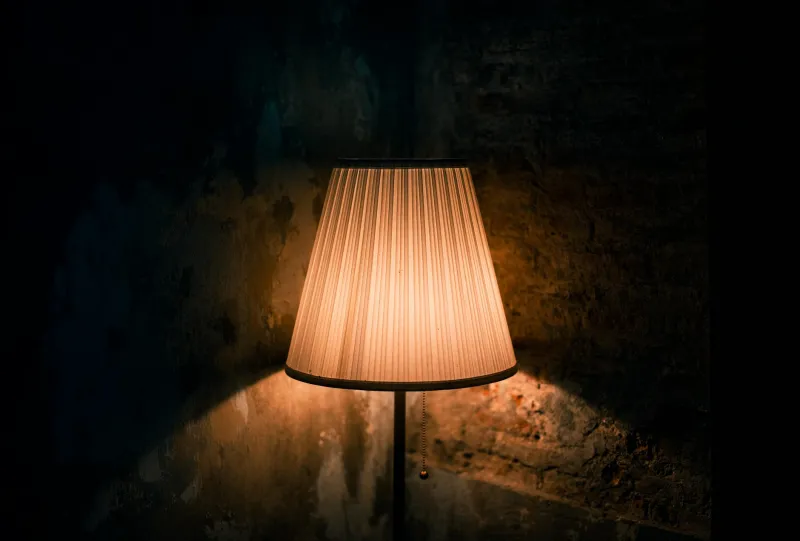
Contemporary interiors benefit from their own follies: objects or furniture pieces that serve primarily visual rather than practical functions. That antique ladder leaning against a wall, the oversized floor lamp in a corner that receives no use, the sculptural chair positioned for viewing rather than sitting—these elements add visual weight and create talking points that transform functional spaces into curated experiences.
Controlling the Emotional Journey
Landscape gardens were designed to evoke specific emotional responses through spatial sequence. Visitors might begin in formal areas near the house, progress through mysterious woodland, emerge into sublime open vistas, and conclude in intimate, contemplative spaces. Each zone triggered different feelings through scale, enclosure, and atmosphere.
Your home can employ similar emotional choreography. Consider the psychological journey guests experience moving from your entrance hall through to your main living space. Does the sequence build anticipation and create memorable moments?
A narrow entrance hall makes a subsequent large living room feel even more generous. Low ceilings in transitional spaces emphasise height in principal rooms. Dark corridors make bright rooms feel luminous.
The Ha-Ha Principle in Interior Design
The ha-ha—that invisible boundary that kept livestock out while preserving uninterrupted views—represents landscape design's most ingenious spatial trick. It created separation without visual interruption, maintaining the illusion of continuous space.
Modern interiors employ ha-ha principles through changes in floor level, material, or texture that define zones without building walls. A raised dining area separated from a sitting room by three steps creates distinct spaces while preserving visual connection. Different flooring materials can delineate zones as effectively as walls while maintaining spatial flow.
Seasonal Considerations
Landscape designers understood that gardens must work across all seasons, planning for winter structure as carefully as summer abundance. They positioned evergreens strategically and designed vistas that remained compelling when deciduous trees were bare.
Interior designers can learn from this seasonal thinking. Rooms should function equally well in winter's artificial light and summer's natural illumination. Furniture arrangements that depend on specific lighting conditions or seasonal foliage views may disappoint for half the year.
Consider how your rooms perform across different times of day and seasons. That seating area positioned to capture morning light might feel abandoned by afternoon. Windows that frame summer gardens beautifully may reveal stark winter landscapes that require different treatment.
The Picturesque vs. The Beautiful
Eighteenth-century aesthetic theory distinguished between the 'beautiful' (smooth, gentle, harmonious) and the 'picturesque' (rough, irregular, dramatic). The best landscape gardens combined both qualities, creating varied emotional experiences within single compositions.
Successful interiors similarly balance smooth and rough, regular and irregular, harmonious and dramatic. A room furnished entirely with sleek modern pieces lacks the textural interest that makes spaces feel lived-in. Conversely, rooms filled only with rustic or irregular elements can feel chaotic.
Combine that minimalist sofa with a roughly textured throw. Balance geometric coffee tables with organic-shaped ceramics. Let smooth plastered walls contrast with roughly hewn wooden beams.
Legacy Lessons
The landscape architects who shaped England's countryside were solving timeless spatial challenges. They understood that the most powerful spaces engage multiple senses, unfold gradually, and reward exploration. They knew that boundaries could be suggested rather than imposed, that anticipation was more powerful than immediate revelation, and that the best designs felt inevitable despite being entirely artificial.
These principles remain as relevant in a London flat as they were in a Georgian estate. The scale may differ, but the psychological fundamentals remain constant. By understanding how landscape designers manipulated perception and emotion through space, today's interior designers—professional or amateur—can create homes that feel infinitely larger and more engaging than their physical dimensions suggest.
The next time you visit a National Trust property, spend as much time studying the garden's spatial choreography as admiring its plants. The lessons learned there will transform how you see—and design—interior space.