The Theatre of Want
Step into any major auction house during viewing week and you'll witness something extraordinary: complete strangers falling in love with objects they'd never considered owning. It's not magic—it's methodical psychology, applied through decades of refined display expertise.
Auction house specialists understand that desire isn't rational. They've perfected the art of emotional manipulation through spatial design, creating environments where a Victorian writing desk becomes not just furniture, but a portal to imagined lives. This same psychology can revolutionise how you display your own collections.
Breathing Space: The Power of Selective Editing
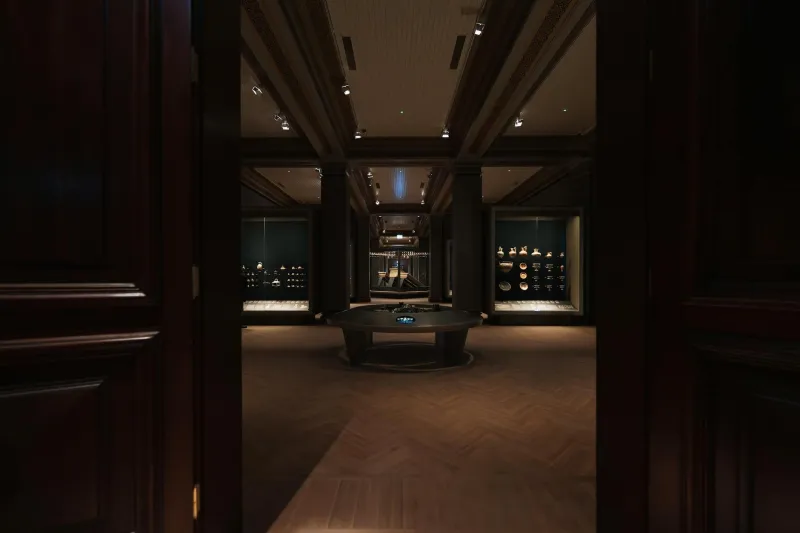
Walk through Christie's King Street galleries and notice what's missing: clutter. Each lot occupies its own breathing space, often dramatically more than seems necessary. This isn't wasteful—it's strategic.
 Photo: Christie's King Street, via c8.alamy.com
"We give important pieces room to speak," explains a senior specialist who's orchestrated some of London's most successful sales. "Crowding diminishes value perception."
This principle transforms home display immediately. That collection of vintage cameras deserves more than a crowded shelf. Give your best pieces space to command attention. Remove competing elements. Let each object tell its story without shouting over neighbours.
Consider the difference between a mantelpiece crammed with ornaments versus one featuring a single, perfectly positioned piece. The lone object gains gravitas, becoming a focal point rather than visual noise.
Lighting as Storytelling
Auction houses employ lighting designers who understand that illumination shapes emotion. They don't simply light objects—they craft moods that make bidders reach for their paddles.
Track lighting in galleries creates pools of warm focus, drawing viewers into intimate relationships with individual pieces. Shadows become as important as highlights, adding mystery and depth.
Translate this to your dining room: instead of uniform overhead lighting, introduce focused illumination for key pieces. A picture light transforms a painting from wall decoration to conversation starter. Table lamps create intimate zones that invite closer inspection of displayed objects.
The Choreography of Discovery
Successful auction house layouts follow carefully planned routes. Viewers are guided through a journey of escalating excitement, with star lots positioned at strategic points where natural foot traffic pauses.
Your home can employ similar choreography. Consider how guests move through your space. Position your most treasured pieces where people naturally linger—beside doorways, at the foot of stairs, or in conversational seating areas.
Create moments of surprise. A beautiful object glimpsed from an adjoining room draws people forward, just as auction houses use sight lines to pull viewers deeper into viewing galleries.
Context Creates Value
Auction specialists excel at creating context that elevates perceived value. A modest watercolour becomes significant when displayed alongside provenance documentation and period-appropriate framing. The story matters as much as the object.
Apply this principle to family heirlooms or market finds. That inherited china cabinet gains gravitas when accompanied by a small, framed family photograph showing it in its original setting. Your grandmother's mixing bowls become sculptural when displayed with vintage cookbooks and handwritten recipes.
The Power of Grouping
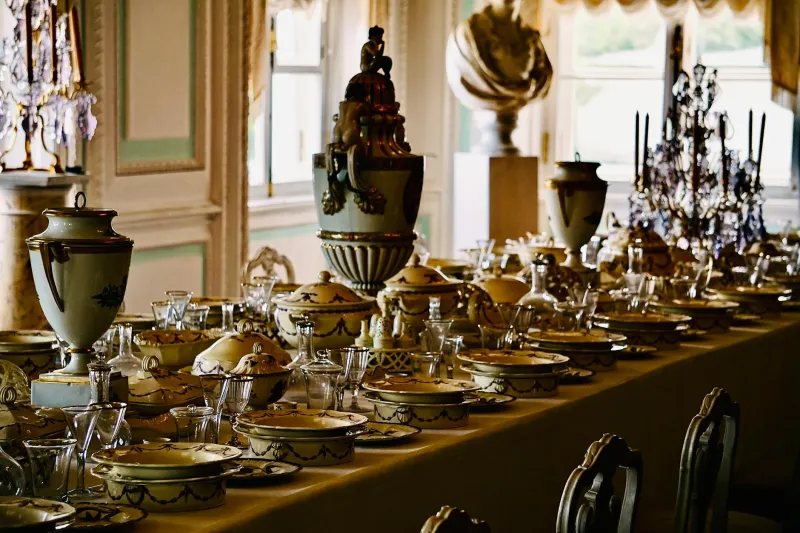
Notice how auction houses cluster related objects. Similar pieces are grouped not randomly, but to create dialogue between items. A collection of Georgian silver appears more significant when pieces converse across a display case.
In your home, resist scattering similar items throughout different rooms. Group your vintage glass collection in one dramatic display rather than distributing pieces randomly. The collective impact creates visual weight that individual items lack.
Pedestals and Platforms
Auction houses understand that elevation equals importance. Significant pieces are literally raised above the ordinary, commanding respect through physical positioning.
You don't need museum-quality plinths. A simple wooden block, a stack of art books, or a floating shelf can elevate a special piece above the everyday. Height creates hierarchy, signalling to viewers which objects deserve attention.
The Invisible Hand of Curation
Perhaps most importantly, auction houses edit ruthlessly. Not every object in their possession appears in sales. Only pieces that contribute to the overall narrative make the cut.
Apply this curatorial discipline to your displays. Rotate collections seasonally. Store pieces that don't currently serve the story you're telling. The objects you choose not to display are as important as those you do.
Professional Secrets for Amateur Collectors
Successful auction house display relies on several professional tricks easily adapted for domestic use. Mirrors positioned behind objects create depth and double visual impact. Neutral backgrounds—often simple grey or cream walls—prevent competing colours from diminishing displayed pieces.
Varying heights within groupings creates visual rhythm. Mix tall candlesticks with lower bowls, or combine standing frames with horizontal books. This undulating skyline keeps viewers engaged longer than uniform arrangements.
Beyond the Sale
The most sophisticated auction houses understand that their role extends beyond selling objects—they're selling dreams, stories, and aspirations. Their display techniques don't just present items; they present possibilities.
Your home displays can achieve similar emotional resonance. That vintage map isn't just decoration—it's an invitation to dream about adventures. Those inherited books aren't just storage—they're windows into family intellectual heritage.
By understanding how auction houses transform objects into desires, we can apply their sophisticated psychology to our own spaces. The goal isn't manipulation—it's celebration. Every treasured possession deserves to be displayed with the same care and intention that auction houses bring to their finest lots.
After all, if these techniques can make strangers bid competitively for objects they've never seen before, imagine what they can do for pieces you already love.