The Accidental Preservationists
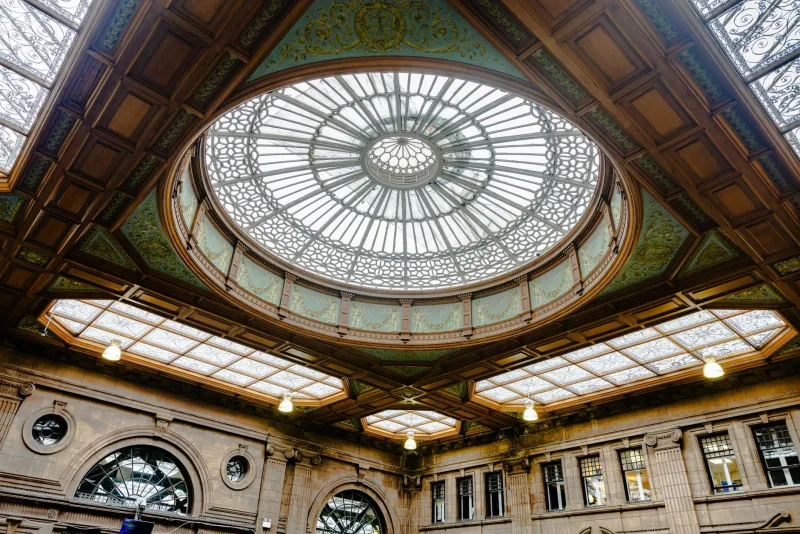
Walk into The Crosse Keys in the City of London, and you'll find yourself beneath soaring coffered ceilings that once echoed with the clatter of typewriters and the rustle of banknotes. This former NatWest headquarters, with its marble columns and bronze detailing, now serves as one of Wetherspoons' most architecturally ambitious venues. It's a transformation that reveals something unexpected about Britain's most polarising pub chain: they've become our most prolific preservers of extraordinary interior spaces.
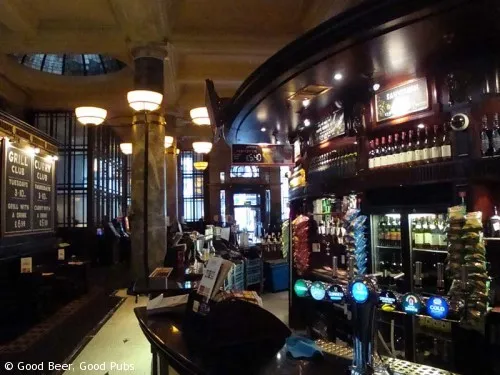 Photo: The Crosse Keys, via www.goodbeergoodpubs.co.uk
While heritage organisations debate and property developers demolish, Wetherspoons quietly swoops in to rescue buildings that others consider too awkward, too grand, or too expensive to adapt. The result is a nationwide collection of spaces that showcase adaptive reuse at its most audacious.
Scale Without Pretension
The genius of Wetherspoons lies not in their carpet choices (though those have their own cult following), but in their fearless approach to scale. Take The Regal in Cambridge, a 1930s cinema whose sweeping Art Deco curves and theatrical proportions could intimidate any designer. Rather than fighting the grandeur, Wetherspoons embraces it, creating zones within the vast space through strategic furniture placement and lighting.
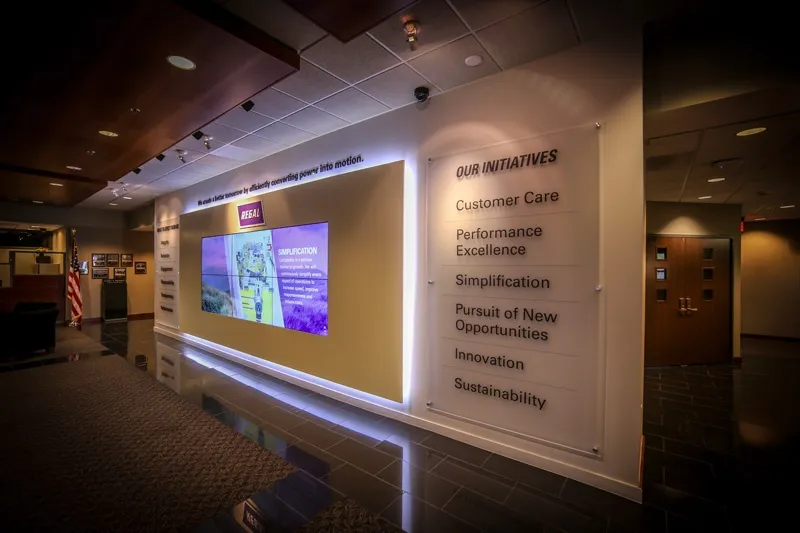 Photo: The Regal, via exhibitconcepts.com
This approach translates directly to domestic design challenges. That Victorian terrace with impossibly high ceilings? The converted chapel with nave-like proportions? Instead of trying to domesticate these spaces into cosy sitting rooms, consider how Wetherspoons would handle them: create intimate seating clusters, use lighting to define areas, and let the architecture do the talking.
The Art of Thoughtful Clutter
Visit any Wetherspoons and you'll notice their distinctive approach to wall decoration: historical photographs, local memorabilia, and period-appropriate artwork covering nearly every surface. This isn't random pub ephemera; it's a carefully curated response to the building's history and the local community's story.
The lesson for homeowners is profound. Rather than leaving large walls stark or filling them with generic art, consider how the chain builds narrative through accumulated objects. Their walls tell stories about place, time, and purpose – principles that can transform any interior from anonymous to atmospheric.
Functional Zoning in Challenging Spaces
Perhaps most impressively, Wetherspoons has mastered the art of making vast, formal spaces feel approachable. The Moon Under Water in Leicester Square occupies a former Edwardian theatre, complete with ornate plasterwork and a soaring ceiling. Rather than being dwarfed by the grandeur, the pub creates multiple experiences within the single space: intimate booth seating in the former dress circle, communal tables on the main floor, and quiet corners that feel almost residential.
 Photo: The Moon Under Water, via share.clubhouse.com
This zoning strategy works brilliantly in domestic contexts. Open-plan living areas, converted barns, or period properties with oversized rooms can all benefit from this approach. Define distinct areas through furniture arrangement, lighting levels, and even subtle changes in flooring materials.
Heritage Without Stuffiness
What Wetherspoons understands – and what many heritage-focused designers miss – is that preserving architectural character doesn't require museum-like reverence. Their interventions are bold but respectful, contemporary but contextual. Original features are celebrated rather than apologised for.
In The Banker in the City, original 1920s banking fixtures remain proudly in place, but they're integrated with modern pub furniture and contemporary lighting. The result feels neither pastiche nor jarring – just honest about the building's multiple lives.
Colour Confidence
While their carpet patterns might be memes, Wetherspoons' approach to colour deserves serious consideration. They're unafraid of rich, saturated tones that many designers would consider too bold for large spaces. Deep blues, forest greens, and burgundies create warmth in spaces that could otherwise feel cold and institutional.
This courage with colour can transform challenging domestic spaces. That double-height hallway or oversized dining room might actually benefit from a dramatic paint choice rather than safe neutrals.
The Democracy of Design
Perhaps most importantly, Wetherspoons proves that good interior design doesn't require enormous budgets or exclusive access to antiques. Their approach relies on understanding space, respecting architecture, and creating atmosphere through thoughtful curation rather than expensive objects.
For homeowners facing similar challenges – awkward proportions, period features that feel overwhelming, or spaces that resist conventional decoration – the Wetherspoons model offers unexpected inspiration. It's about confidence, context, and the courage to let buildings be what they want to be.
Beyond the Stereotypes
The next time you find yourself in a Wetherspoons, look beyond the £1.99 breakfast and consider the space itself. Notice how they've handled the transition between original architecture and contemporary use, how they've created intimacy within grandeur, and how they've built atmosphere through accumulated detail.
It might not be fashionable to admit, but Britain's most ubiquitous pub chain has quietly assembled one of our most interesting collections of adaptive reuse projects. For anyone grappling with difficult spaces, challenging proportions, or the question of how to live with architectural grandeur, there are lessons here worth learning.