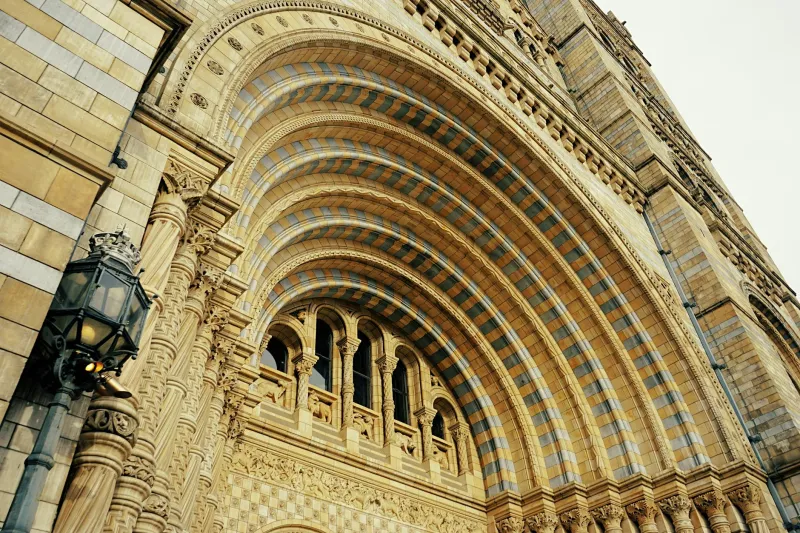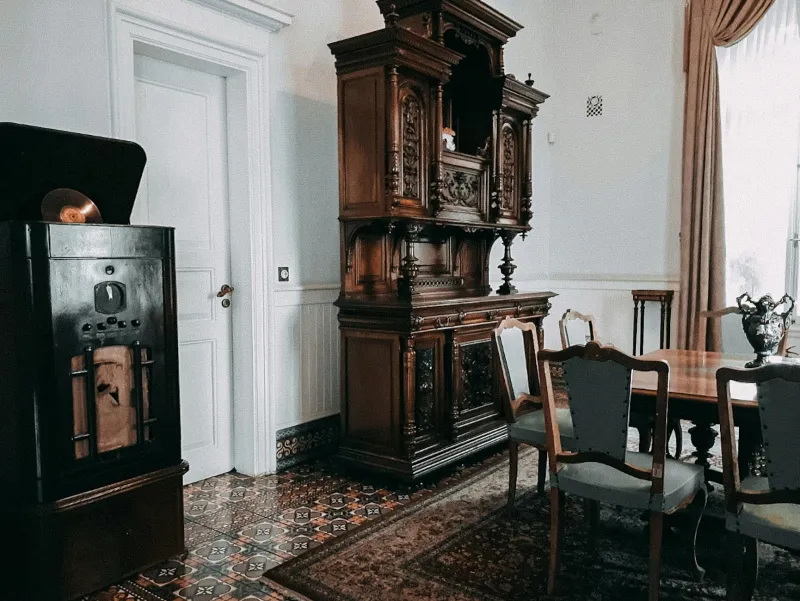
Let's settle this once and for all: your Georgian terrace is not a museum, your Victorian villa is not a shrine, and your Edwardian semi is certainly not a period drama waiting to happen. These architectural treasures that populate British streets from Edinburgh to Exeter are something far more exciting – they're the ultimate stage sets, complete with built-in drama and ready for contemporary interpretation.
The Great British Backdrop
Walk through any established British neighbourhood and you'll encounter an embarrassment of architectural riches. Those soaring Georgian ceilings weren't designed for timid furniture arrangements. The elaborate Victorian cornicing wasn't meant to frame beige walls and safe choices. The generous Edwardian proportions weren't created for minimalist restraint.
Yet somehow, we've been conditioned to treat these spaces with the kind of reverence usually reserved for National Trust properties. The result? Thousands of magnificent homes neutered by nervous decorating, their theatrical potential squandered on heritage paint colours and reproduction furniture that wouldn't look out of place in a provincial museum.
Architecture as Co-Star
The secret that set designers have always understood is that strong architectural features aren't constraints – they're collaborators. Take the work of interior designer Fiona Campbell-Smith, who recently transformed a Grade II listed townhouse in Bloomsbury. Rather than tiptoeing around the original features, she treated them as scene partners.
Against the room's original Georgian panelling, Campbell-Smith installed floor-to-ceiling shelving painted in deep forest green, filled with an eclectic collection of ceramics, books, and curiosities. The contrast is startling – and utterly successful. The panelling provides gravitas and history, while the contemporary styling brings energy and personality.
"The Georgian bones give you permission to be bold," Campbell-Smith explains. "These rooms were designed for drama. The architects who created them understood theatre – they were designing spaces for performance, for social interaction, for making an impression."
The Maximalist Advantage
This is where Britain's period housing stock reveals its secret weapon. Unlike the clean lines and neutral palettes that work so well in contemporary spaces, period properties positively thrive on maximalist treatments. Those deep window reveals and substantial architraves can handle pattern, colour, and visual complexity in ways that would overwhelm modern builds.
Consider the transformation of a Victorian house in Clapham by design duo Harriet Anstruther and Fritz Fryer. They've layered William Morris wallpapers against original picture rails, hung contemporary art alongside family portraits, and mixed vintage Persian rugs with modern furniture. The effect should be chaotic – instead, it's harmonious, because the strong architectural framework holds everything together.
"Victorian builders were maximalists themselves," Anstruther points out. "Look at the elaborate plasterwork, the decorative tiles, the stained glass. They understood that more can be more, not less."
Case Study: The Theatrical Terrace
Nowhere is this principle more evident than in the Camden home of theatre director Simon McBurney. His 1840s terraced house reads like a masterclass in confident period styling. The entrance hall features dramatic black walls that make the white cornicing pop like stage lighting. The drawing room combines original shutters with bold contemporary artworks and furniture that spans three centuries.
Most provocatively, McBurney has painted the interior of his sash window frames in contrasting colours – deep blue in the study, warm ochre in the dining room. It's exactly the kind of detail that would horrify purists, but it demonstrates how period features can be enhanced rather than simply preserved.
"I treat each room like a different act in the same play," McBurney explains. "The architecture provides the script, but the interpretation is entirely contemporary."
Breaking the Beige Conspiracy
The most common crime against British period properties is the assumption that historical architecture demands historical decorating. This misconception has led to an epidemic of 'heritage' colour schemes that drain the life from rooms designed for vitality.
Designer Luke Edward Hall has made a career of proving this wrong. His approach to a Regency flat in Brighton involved painting the main reception room in vibrant coral pink, a colour that would have been perfectly at home in the original period but feels startlingly fresh today. The room's elaborate ceiling rose and cornicing provide the perfect frame for this bold choice.
"Regency interiors were incredibly colourful," Hall notes. "We've somehow convinced ourselves that the past was beige, but it absolutely wasn't. These rooms were designed to be noticed."
The Contemporary Prop Master
One of the most effective ways to energise period interiors is to approach furniture and accessories like a props master rather than an interior designer. Instead of seeking pieces that 'match' the period of the house, look for objects that tell interesting stories and create visual dialogue with the architecture.
In her Edwardian house in Margate, artist Tracey Emin has filled rooms with an extraordinary mix of contemporary art, vintage finds, and personal memorabilia. The house's solid architectural framework – those generous proportions and beautiful windows – provides the perfect stage for this eclectic collection.
Practical Rebellion: Making It Work
Embrace the Drama
Period rooms have theatrical scale – use it. Hang art salon-style, layer rugs, fill bookcases to bursting. These spaces can handle visual complexity.
Contrast, Don't Match
The most successful period interiors create dialogue between old and new. Pair contemporary furniture with original features, modern art with period architecture.
Paint with Confidence
Period details look magnificent against strong colours. That elaborate cornicing will pop against a dark wall in ways it never could against magnolia.
Layer Like a Set Designer
Build your rooms in layers – background (walls, floors), midground (furniture, major pieces), foreground (accessories, personal items). Each layer should contribute to the overall story.
The Permission to Play
Perhaps the most liberating realisation about British period properties is that they were designed by people who understood drama, grandeur, and visual impact. These weren't architects creating neutral backgrounds – they were designing spaces for living, entertaining, and making statements.
Your Georgian terrace has survived two centuries of changing tastes. Your Victorian villa has weathered countless decorating trends. These buildings aren't fragile museum pieces – they're robust, adaptable stages ready for whatever performance you want to create.
The tragedy isn't that someone might paint a period interior in unexpected colours or fill it with contemporary furniture. The tragedy is that so many of these magnificent spaces are being underused, their dramatic potential wasted on timid decorating and misguided reverence.
The Final Act
Britain's period housing stock represents one of the world's greatest collections of domestic theatre. Every Georgian terrace, Victorian villa, and Edwardian house is a ready-made stage set, complete with architectural details that would cost a fortune to recreate today.
The question isn't whether these homes deserve respect – of course they do. The question is whether we're showing that respect through preservation or through creative interpretation. The best period interiors aren't museums; they're living spaces that honour their architectural heritage while embracing contemporary life.
Treat your period home like the stage set it was always meant to be. The architecture has already provided the drama – now it's time to add the soul.