The Art of the First Impression
Walk into any show home in Manchester or browse through property listings in Bath, and you'll notice something peculiar: they all feel strangely familiar, like scenes from films you've watched but can't quite place. That's no accident. Britain's property styling industry has been quietly pillaging Hollywood's playbook, employing the same psychological tricks that film production designers use to establish character, mood, and narrative within seconds of a scene opening.
"We're essentially creating a three-act play in 30 minutes," explains Sarah Mitchell, a home staging specialist who's transformed over 200 properties across the Home Counties. "The entrance is Act One – it sets the tone. The living spaces are Act Two – where the story unfolds. And the master bedroom is Act Three – the emotional crescendo that seals the deal."
This theatrical approach to property presentation isn't just estate agent fluff. Research from the Royal Institution of Chartered Surveyors shows that professionally staged homes sell 25% faster and achieve prices up to 6% higher than unstaged properties. But the techniques behind these results read like a masterclass in cinematic storytelling.
Scaling for the Camera
Film production designers have long understood that furniture must be scaled differently for camera than for real life. Too-large pieces overwhelm the frame; too-small ones make spaces feel cavernous and unwelcoming. Property stylists have adopted this principle wholesale.
"I always use furniture that's about 15% smaller than what people would normally choose," reveals James Whitfield, whose London-based staging company has worked on properties from Notting Hill townhouses to converted warehouses in Shoreditch. "It's the same trick they use on film sets. Smaller furniture makes rooms appear larger, but more importantly, it makes potential buyers feel like giants in the space – psychologically powerful and in control."
This isn't just about cramming in a three-piece suite where a two-seater would suffice. Whitfield's team employs the film industry's "hero, secondary, background" hierarchy when dressing rooms. The hero piece – perhaps a statement armchair or striking artwork – draws the eye and establishes character. Secondary elements support the narrative, while background pieces fill space without competing for attention.
The Psychology of Props
In cinema, every object tells a story. That dog-eared novel on the bedside table reveals character depth; the fresh flowers suggest someone who cares about beauty; the strategically placed wine bottle implies sophistication and leisure time. Property stylists have weaponised these subtle narrative devices.
"We call them 'lifestyle anchors'," explains Rebecca Chen, whose Birmingham-based company stages properties across the Midlands. "A yoga mat casually rolled in the corner of a bedroom suggests wellness and self-care. A cookbook left open on the kitchen counter implies someone who loves to entertain. These aren't random choices – they're carefully selected to help buyers project themselves into the space."
The parallels with film production design are striking. Just as a cinematographer might place a chess set in a study to suggest intellectual prowess, property stylists deploy books, fresh fruit, and artfully arranged throws to construct an aspirational lifestyle that buyers want to step into.
Lighting the Scene
Hollywood's golden rule – that lighting is 60% of the shot – has found new life in British property marketing. Professional staging now involves the same three-point lighting principles that cinematographers use to create mood and atmosphere.
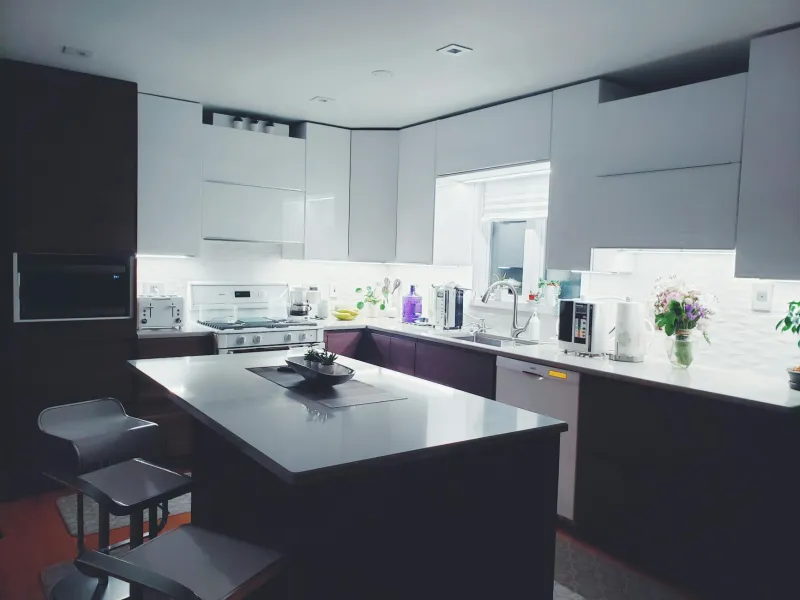
"Natural light is your key light," explains Mitchell. "But we always add fill lighting – table lamps, floor lamps, even candles – to eliminate harsh shadows and create warmth. And we use accent lighting, like under-cabinet LEDs or picture lights, as our rim lighting to add depth and interest."
The result is properties that photograph beautifully for online listings but, more importantly, feel emotionally engaging when viewed in person. Estate agents report that staged properties generate 40% more viewing requests than unstaged equivalents – a direct result of this cinematic approach to lighting.
The Colour Palette Strategy
Film production designers spend months developing colour palettes that subconsciously influence audience emotions. Property stylists have condensed this process into a science of their own. Gone are the days when magnolia walls were enough; today's staging employs sophisticated colour psychology borrowed directly from cinema.
"We use what I call 'emotional colour mapping'," says Chen. "Soft blues in bedrooms to suggest tranquillity, warm greys in living areas for sophistication, and always, always a pop of colour – usually in the kitchen – to create energy and optimism."
From Staging to Screen
The crossover between property styling and film production runs deeper than technique. Several of Britain's most successful home stagers cut their teeth in television and film. Whitfield worked as an assistant set decorator on period dramas before transitioning to property; Mitchell spent five years dressing sets for commercials.
"The skills are identical," argues Whitfield. "Whether you're creating a believable family home for a TV drama or staging a property for sale, you're constructing a narrative that an audience – viewers or buyers – needs to believe in immediately."
Making It Work for You
For homeowners preparing to sell, the lessons from this cinematic approach are immediately applicable. Start with your entrance – it should tell a clear story about who might live there. Use furniture that's slightly smaller than feels natural; it will make your rooms appear more spacious. Deploy lifestyle props strategically – a few carefully chosen books, a vase of fresh flowers, a throw casually draped over a chair.
Most importantly, think like a film director. Every room should have a clear purpose and mood. The kitchen might be the heart of family life, the living room a space for relaxation and entertainment, the bedroom a private sanctuary. Make each space tell that story clearly, and buyers will find themselves not just viewing your property, but auditioning for a role in the life it represents.
In an age where property searches begin online and first impressions are formed in milliseconds, the marriage of Hollywood glamour and British pragmatism has created a new art form. It's staging, but not as our parents knew it – it's pure cinema, designed to sell not just a house, but a dream of the life that might unfold within its walls.