The Stage-to-Home Pipeline
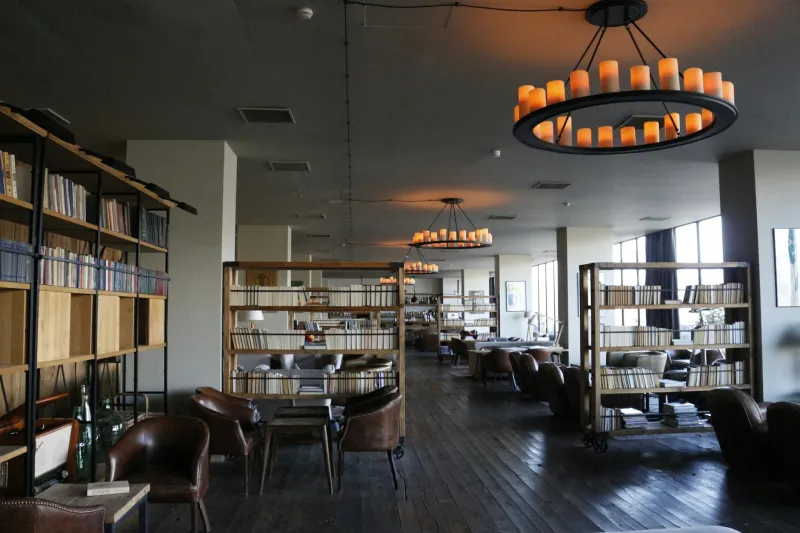
Walk through any design-conscious British home today, and you'll likely spot theatrical DNA hiding in plain sight. That moody emerald velvet sofa? Probably inspired by the sumptuous interiors of The Lion King's Pride Rock scenes. The industrial copper lighting fixtures? They echo the stark beauty of recent National Theatre productions.
Whilst we're quick to credit Instagram influencers and design magazines for our interior inspiration, there's a far more dramatic source shaping British taste: the stage itself.
"Theatre sets are essentially mood boards brought to life," explains Sarah Chen, a set designer who's worked on productions from Hamilton to The Crown. "We're creating emotional landscapes that audiences need to believe in within seconds. That same psychology applies perfectly to home interiors."
Victorian Excess Meets Modern Maximalism
The recent surge in maximalist interiors—think William Morris wallpapers, jewel-toned velvets, and ornate brass fixtures—owes much to the theatrical revival of Victorian literature. When the RSC's acclaimed Great Expectations toured in 2019, its richly layered set design didn't just captivate audiences; it sparked a renaissance in cluttered, collected interiors.
Interior stylist Marcus Webb, who frequently sources props for both stage and residential projects, noticed the shift immediately. "After that production, I had clients specifically requesting 'Dickensian drama' for their dining rooms. They wanted the same sense of lived-in luxury, the layered textures, the slightly overwhelming richness."
The influence flows both ways, too. Webb recalls sourcing genuine Victorian pieces from auction houses for the production, many of which later appeared in high-end interior magazines as "investment pieces" for period property renovations.
Brutalist Beauty: When Concrete Becomes Cosy
At the opposite end of the spectrum, the National Theatre's stripped-back aesthetic has profoundly influenced British minimalism. Productions like Angels in America and The Curious Incident of the Dog in the Night-Time featured stark, geometric sets that celebrated raw materials—exposed concrete, industrial metals, and dramatic negative space.
"Those productions showed us that brutalism could be beautiful," says interior designer Priya Patel, whose Shoreditch studio specialises in what she calls "theatrical minimalism." "Suddenly, clients wanted polished concrete floors, exposed steel beams, and that sense of dramatic emptiness that makes every piece of furniture feel intentional."
The trend has filtered down to high street retailers, too. IKEA's recent industrial collection and West Elm's concrete accessories can trace their aesthetic DNA directly back to these influential productions.
The Colour Psychology Connection
Perhaps nowhere is the theatre-to-home influence more evident than in colour choices. Set designers are masters of colour psychology, using specific palettes to manipulate audience emotions—skills that translate perfectly to domestic spaces.
Take the infamous "Phantom purple" from The Phantom of the Opera's long West End run. That particular shade of deep aubergine became a signature colour for romantic, gothic interiors throughout the 1990s and 2000s. Similarly, the warm terracottas and burnt oranges from The Lion King helped popularise the "sunset palette" that dominated British interiors in the early 2010s.
"We're not just decorating a room; we're creating an emotional experience," explains Chen. "Theatre taught us that colour isn't just aesthetic—it's psychological. That deep blue isn't just pretty; it's calming, introspective, mysterious."
Texture and Materiality: Lessons from the Props Department
One of theatre's greatest gifts to interior design is its fearless approach to texture mixing. Stage sets must read clearly from the back row, which means exaggerated contrasts and bold material combinations—techniques that create visual interest in domestic spaces too.
Recent productions have championed unexpected material pairings: rough hessian against polished marble, weathered wood alongside gleaming brass, industrial chain mail as room dividers. These combinations, initially shocking on stage, gradually filter into mainstream design consciousness.
"Theatre gives us permission to be bold," says Webb. "When clients see a beautiful set photograph in the Evening Standard, they're already primed to accept that same aesthetic in their own homes."
The Digital Influence
Social media has accelerated the stage-to-home pipeline dramatically. Production photography, once confined to theatre programmes, now reaches millions through Instagram and Pinterest. Set designers have become inadvertent interior influencers, with their work inspiring countless mood boards and design schemes.
The recent Frozen production at Theatre Royal Drury Lane generated thousands of Pinterest saves for its icy blue palette and crystalline textures. Within months, similar colour schemes appeared in everything from nursery designs to luxury hotel lobbies.
Shopping the Stage
For homeowners wanting to capture theatrical drama in their own spaces, the key lies in understanding the underlying principles rather than copying specific pieces. Look for:
- Layered lighting: Theatre's sophisticated lighting rigs translate beautifully to homes through multiple light sources at different levels
- Statement textures: Don't be afraid of dramatic contrasts—smooth against rough, matte against glossy
- Colour confidence: Choose palettes that evoke specific emotions, just as set designers do
- Purposeful negative space: Even maximalist theatre sets use empty areas strategically for visual breathing room
The Future Stage
As British theatre continues to push creative boundaries, expect our interiors to follow suit. Upcoming productions experimenting with sustainable materials, interactive technologies, and immersive environments will undoubtedly influence how we think about domestic spaces.
"Theatre has always been about transformation," reflects Chen. "We transform actors into characters, empty stages into entire worlds. It's only natural that we'd help transform houses into homes with real emotional resonance."
The next time you're admiring a particularly striking interior, take a moment to consider its theatrical heritage. Chances are, somewhere in its DNA lies the influence of a dimly lit stage, a dramatic set, and a designer who understood that the best spaces—whether for performance or living—tell compelling stories.