The Ringmaster's Palette Revolution
While the rest of Britain has spent the last decade tiptoeing around beige throw cushions and whispering about 'Scandi chic', circus designers have been orchestrating visual symphonies that would make even the boldest interior stylist blush. These unsung heroes of spatial drama don't just create backdrops—they craft entire universes where the impossible feels inevitable, and where every surface tells a story worth shouting about.
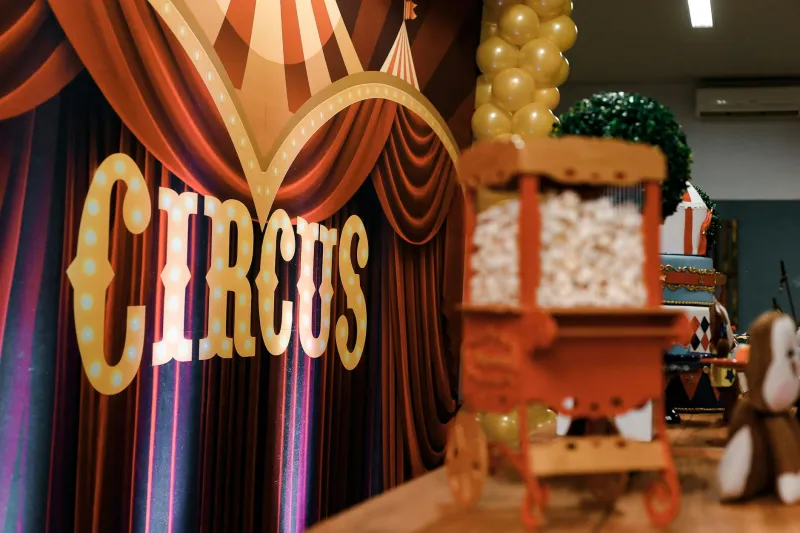
Take Sarah Chen, production designer for Cirque Plume's current UK tour. Her latest creation transforms a standard marquee into what she calls 'controlled chaos'—think deep burgundy velvet drapes meeting electric blue rigging, punctuated by hand-painted panels that seem to shift between Victorian music hall and futuristic fever dream. "We don't have the luxury of subtlety," Chen explains from her workshop in Hackney. "Every element needs to work from the back row, which means we've learned to be fearless with scale, colour, and texture in ways that traditional interior design simply doesn't dare."
Lessons from the Sawdust Circle
This fearlessness is precisely what's catching the attention of Britain's more adventurous homeowners and hospitality designers. The circus aesthetic doesn't whisper—it roars. And increasingly, that roar is being heard in unexpected places: from the statement ceiling installation at Manchester's newest boutique hotel to the deliberately dramatic dining room of a converted Victorian terrace in Brighton.
The principles are surprisingly transferable. Circus designers understand that vertical space is just as important as floor space—hence their mastery of dramatic ceiling treatments, hanging installations, and unexpected overhead lighting. They know that mixing textures creates visual interest: rough rope against smooth silk, weathered leather beside polished brass, vintage canvas stretched over modern steel frames.
Most crucially, they've never bought into the myth that 'less is more'. In the circus world, more is more, and that philosophy is finding fertile ground in British homes that have grown tired of playing it safe.
The Art of Controlled Spectacle
James Whitmore, who's designed sets for everyone from Zippos Circus to the London International Mime Festival, argues that circus design's greatest gift to domestic interiors isn't actually about being louder—it's about being braver. "We work with constraints that would terrify most interior designers," he notes. "Limited budgets, temporary structures, constant travel, and the need to create maximum impact in minimum time. These limitations force us to be incredibly resourceful and bold in our choices."
This resourcefulness is evident in how circus designers approach colour. Rather than following trend forecasts or playing it safe with neutral palettes, they understand colour as an emotional tool. Deep jewel tones create intimacy even in vast spaces. Metallic accents catch and reflect light in ways that make ordinary materials feel precious. Unexpected colour combinations—think forest green with burnt orange, or midnight blue with gold—create visual tension that keeps spaces interesting.
From Canvas to Sitting Room
The influence is already filtering through. Independent British homeware brands like House of Hackney and Clarke & Clarke have begun incorporating circus-inspired elements into their collections: bold stripes reminiscent of traditional big top canvas, dramatic tassels and fringing that echo vintage circus costumes, and statement lighting that borrows from the theatrical rigs that illuminate aerial performances.
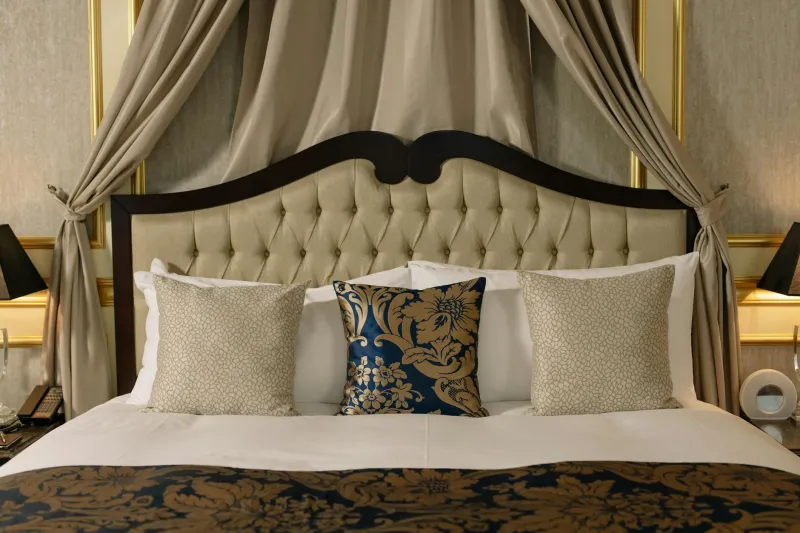
Boutique hotels are perhaps the most natural adopters of circus aesthetics. The Zetter Townhouse in London's Fitzrovia has incorporated elements of vintage circus posters and carnival mirrors into its eclectic interiors, while Edinburgh's Prestonfield House uses dramatic draping and rich velvets that wouldn't look out of place in a Victorian travelling circus.
Breaking the Beige Barrier
But it's in residential spaces where circus-inspired maximalism is making its most interesting mark. Interior designer Lucy Barlow, whose Cotswolds practice has gained attention for its 'theatrical domesticity' approach, credits circus design with teaching her clients to embrace pattern and colour. "I show them images from contemporary circus productions, and suddenly they understand that their sitting room can handle both a leopard print rug and emerald green walls," she explains. "Circus design gives people permission to be bold."
The key, according to Barlow and other designers working in this space, is understanding that maximalism isn't about throwing everything together and hoping for the best. Circus designers are masters of controlled chaos—every seemingly random element serves a purpose, whether it's directing the eye, creating atmosphere, or supporting the overall narrative of the space.
The Future Under Canvas
As Britain emerges from years of playing it safe with interior choices, circus design offers a template for how to be bold without being overwhelming. It's about understanding that our homes can be stages for our own stories, and that sometimes those stories deserve a little drama, a splash of colour, and yes, even a sequin or two.
The circus designers scattered across Britain's creative landscape aren't just creating temporary spectacles—they're quietly revolutionising how we think about living with colour, texture, and theatrical flair. In a world that's spent too long whispering, perhaps it's time to learn from those who've never been afraid to shout.